


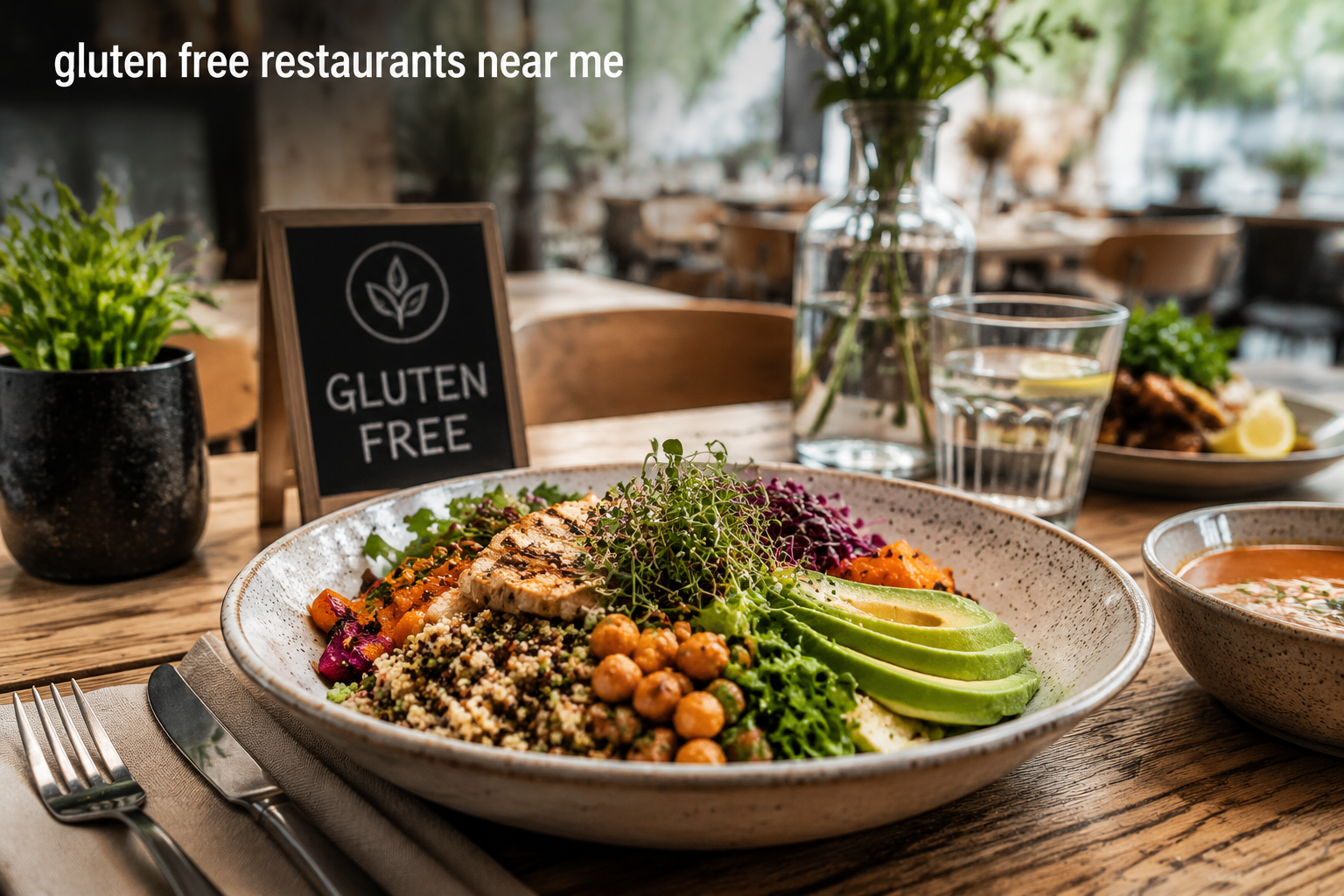
Finding a gluten free restaurant that genuinely understands your needs is no longer the exhausting challenge it once was. A decade ago, asking for a gluten free meal at most restaurants was met with blank stares or a plain salad. Today, the landscape has shifted dramatically, and the options available to anyone searching for gluten free restaurants near me are broader, safer, and more delicious than ever before.
Whether you have celiac disease, a diagnosed gluten sensitivity, or simply choose to avoid gluten for wellness reasons, knowing how to locate, evaluate, and dine safely at the right restaurants makes all the difference. This guide covers everything you need to know, from the tools you should use to the questions you must ask before you ever sit down.
| Key Facts | Details |
|---|---|
| Who needs gluten free dining | People with celiac disease, non-celiac gluten sensitivity, wheat allergy, or lifestyle choice |
| Celiac disease prevalence | Affects approximately 1 in 133 Americans; around 2.4 million remain undiagnosed |
| People following GF diets | Roughly 30% of US adults self-report some form of gluten-free eating |
| Global GF food market (2025) | Valued at approximately $14.1 billion, projected to reach $33 billion by 2034 |
| Biggest dining risk | Cross-contamination in shared kitchens, not just menu ingredients |
| Best apps for finding GF restaurants | Find Me Gluten Free, Gluten Dude, GlutenGo |
| Key search tip | Always verify directly with the restaurant before visiting |
Why the Demand for Gluten Free Restaurants Is Growing Fast
The rise in people searching for gluten free restaurants near me is not a passing food trend. It is grounded in genuine medical need and a broader shift in how people approach nutrition. Celiac disease, an autoimmune condition where gluten consumption triggers an immune response that damages the small intestine, affects about 1 in 133 Americans. What makes this even more significant is that approximately 2.4 million people in the United States remain undiagnosed, according to recent estimates.
Beyond celiac disease, non-celiac gluten sensitivity affects an estimated 5% of the US population. A 2025 meta-analysis drawing on data from nearly 50,000 people across 16 countries found that 10% of participants reported having non-celiac gluten or wheat sensitivity. This explains why roughly 30% of US adults self-report following some form of gluten-free eating, even though only a fraction have a clinical diagnosis.
The food industry has taken notice. The global gluten free food market was valued at approximately $14.1 billion in 2025 and is projected to grow to around $33 billion by 2034, driven by rising celiac diagnoses, increased awareness, and consumer demand for allergen-friendly options. Restaurants across every price point are now expanding their menus to accommodate this audience.
Understanding the Difference: Gluten Free Menus vs. Dedicated Kitchens
Before diving into how to find Best gluten free restaurants near me, it is critical to understand a distinction that can determine whether a meal is safe or dangerous for someone with celiac disease.
A restaurant offering a “gluten free menu” simply means certain items are prepared without gluten-containing ingredients. However, if the kitchen also handles wheat, barley, and rye, cross-contamination is a very real risk. Shared cutting boards, pasta water, frying oil, and even cooking utensils can transfer enough gluten to trigger a reaction.
A dedicated gluten free kitchen, on the other hand, eliminates gluten from the entire cooking environment. Everything on the menu is gluten free, which means there is zero risk of cross-contact from shared equipment. For people with celiac disease, a fully dedicated kitchen is the gold standard. For those with mild sensitivities, a restaurant with strong cross-contamination protocols may be perfectly adequate.
This distinction shapes every step of finding the right place to eat.
7 Proven Ways to Find Best Gluten Free Restaurants Near Me
1. Use the Find Me Gluten Free App
Find Me Gluten Free is one of the most widely used tools for locating gluten-friendly restaurants. With over 28,500 business locations listed, the platform lets users read community-sourced reviews, view gluten free menus, check safety ratings, and get directions. It functions as a starting point, though it is important to remember that the ratings are crowd-sourced, which means they reflect varied levels of celiac sensitivity among reviewers. Always cross-reference reviews with a direct call to the restaurant.
2. Try the Gluten Dude App for Vetted Listings
For those who need a higher level of assurance, the Gluten Dude app takes a more rigorous approach. Rather than relying on community submissions alone, every restaurant on the platform is personally researched for cross-contamination practices. Listings include direct kitchen notes on preparation methods, shared equipment, and fryer policies. The app filters restaurants by safety level, from 100% dedicated gluten free kitchens to chains with a strong community track record.
3. Search Google with Specific Terms
A basic Google search for gluten free restaurants near me will surface a wide range of results, but refining the search helps narrow options down quickly. Try adding terms like “dedicated gluten free kitchen,” “celiac safe,” or the specific neighborhood you are in. Google Maps also allows filtering by dietary options in many regions, letting you scan nearby restaurants that have flagged gluten free options on their profiles.
4. Check Yelp Filters and Reviews
Yelp has long allowed users to filter restaurant searches by dietary restrictions, including gluten free options. More useful than the filter itself are the detailed reviews left by other diners who explicitly mention how the restaurant handled their request, what the staff knew about cross-contamination, and whether the experience was truly safe. Look for patterns across multiple reviews rather than relying on a single experience.
5. Look for Chain Restaurants with Standardized Protocols
When traveling or in an unfamiliar area, chain restaurants can actually be one of the safer choices. Because allergen protocols, staff training, and menu documentation are standardized across locations, there is greater predictability in how a gluten free order will be handled. Many major chains publish detailed allergen menus online. Always confirm with the local manager, since individual location practices can still vary.
6. Ask Local Celiac and Gluten Free Communities
Online communities, both on social media and dedicated forums, are an underrated resource. People with celiac disease are typically highly discerning about where they eat and are generous with sharing specific, detailed recommendations. A local Facebook group, a Reddit thread for your city, or a community attached to a celiac organization can surface names of restaurants that may not appear on any official app.
7. Call Ahead and Ask the Right Questions
No app or review replaces a direct conversation with the restaurant. Before visiting any new establishment, call ahead and ask specific questions: Do you have a dedicated gluten free prep area? Are your gluten free items cooked in shared fryers? Are staff trained on cross-contamination? A knowledgeable and confident answer from staff signals that the restaurant takes the matter seriously. Vague or uncertain responses are a red flag worth taking seriously.
What to Say When You Arrive at a Gluten Free Restaurant
Finding the restaurant is only half the job. When you arrive, how you communicate your needs determines how safely your meal is prepared. Rather than simply saying “I eat gluten free,” be direct and specific. Inform your server that you have a medical need or serious sensitivity and ask that they communicate this to the kitchen.
Request that separate utensils, cutting boards, and cookware be used for your dish. Ask whether the dish you are ordering shares a fryer with breaded items. If the restaurant is busy and staff seems rushed, it may be worth asking to speak with a manager or chef directly. The extra two minutes this conversation takes can prevent hours or days of discomfort.
It also helps to alert the restaurant to your needs when making a reservation, if possible. This gives kitchen staff time to prepare and ensures there is no ambiguity when you arrive.
Red Flags to Watch for at Any Restaurant
Not every restaurant that claims to offer gluten free options is equipped to do so safely. There are a number of warning signs worth watching for. If a server seems unfamiliar with the concept of cross-contamination or dismisses your concern as overly cautious, that is a meaningful signal. If the gluten free pasta on the menu is simply a different pasta shape boiled in the same pot as regular pasta, it is not a safe option for someone with celiac disease.
Similarly, a restaurant that has recently added a “gluten free” label to existing dishes without changing its kitchen protocols is not necessarily a safer choice. Menu labels are a starting point, not a guarantee. The safest restaurants are those where staff can clearly explain the measures taken at every step of food preparation.
Gluten Free Dining When Traveling
One of the most stressful situations for anyone who relies on gluten free restaurants near me searches is dining in an unfamiliar city. Preparation is the most effective strategy. Before a trip, use apps like Find Me Gluten Free, Gluten Dude, or GlutenGo to build a list of options near your destination. Cross-check those results with direct calls or emails to restaurants a day or two before you plan to visit.
In cities with larger health-conscious dining scenes, such as Austin, Los Angeles, and New York, the availability of dedicated gluten free kitchens is notably higher. New York in particular has seen a surge in fully gluten free establishments, including bakeries, sushi counters, and Mexican eateries that operate with zero gluten on the premises.
When traveling internationally, carrying a translated dining card that explains your dietary needs in the local language is a practical and widely recommended tool for communicating clearly with kitchen staff who may not be fluent in English.
The Future of Gluten Free Dining
The growth trajectory of the gluten free food market strongly suggests that gluten-accommodating restaurants are not going away. In fact, with global market projections pointing toward $33 billion by 2034 and a compound annual growth rate of nearly 10%, investment in gluten free dining infrastructure will only increase. More restaurants are training staff in allergen protocols, more apps are improving their vetting processes, and more kitchens are operating as fully dedicated gluten free environments.
For anyone who has spent years navigating the uncertainty of dining out with dietary restrictions, these developments represent a genuine and long-overdue improvement. The tools to find safe, delicious Best gluten free restaurants near me have never been more accessible, and using them strategically makes the experience of eating out something to look forward to rather than something to dread.
Frequently Asked Questions
What is the fastest way to find Best gluten free restaurants near me?
The quickest approach is to open the Find Me Gluten Free app or search Google Maps for “gluten free restaurants” in your current location. Both tools surface nearby options with ratings and menu details. Always follow up with a call to the restaurant to confirm their cross-contamination practices before you visit.
Is there a difference between a gluten free menu and a dedicated gluten free kitchen?
Yes, and it is an important distinction. A gluten free menu means certain dishes are made without gluten-containing ingredients, but the kitchen still handles gluten, which creates a risk of cross-contamination. A dedicated gluten free kitchen means no gluten enters the kitchen at all, making it far safer for people with celiac disease or serious sensitivities.
Can people with celiac disease safely eat at regular restaurants?
Yes, but it requires careful vetting. Some regular restaurants have strong allergen protocols, trained staff, and designated prep areas that make them reasonably safe for people with celiac disease. The key is to research beforehand using trusted apps, read reviews from other celiac diners, call ahead, and communicate clearly with staff when you arrive.
What questions should I ask a restaurant before eating there on a gluten free diet?
Ask whether they have a dedicated gluten free prep area, whether gluten free dishes are cooked in shared fryers, how staff are trained on cross-contamination, and whether they use separate utensils and cookware for gluten free orders. A knowledgeable, confident, and specific answer from the staff is a positive sign. Hesitation or vagueness warrants caution.
Are chain restaurants a safe option for gluten free dining?
Many chain restaurants publish detailed allergen menus and have standardized training protocols, which can make them a reliable option, especially when traveling somewhere unfamiliar. However, individual location practices can vary, so it is worth confirming with the local manager before ordering. Several chain apps and websites also include updated gluten free menu information that can be reviewed in advance.
