


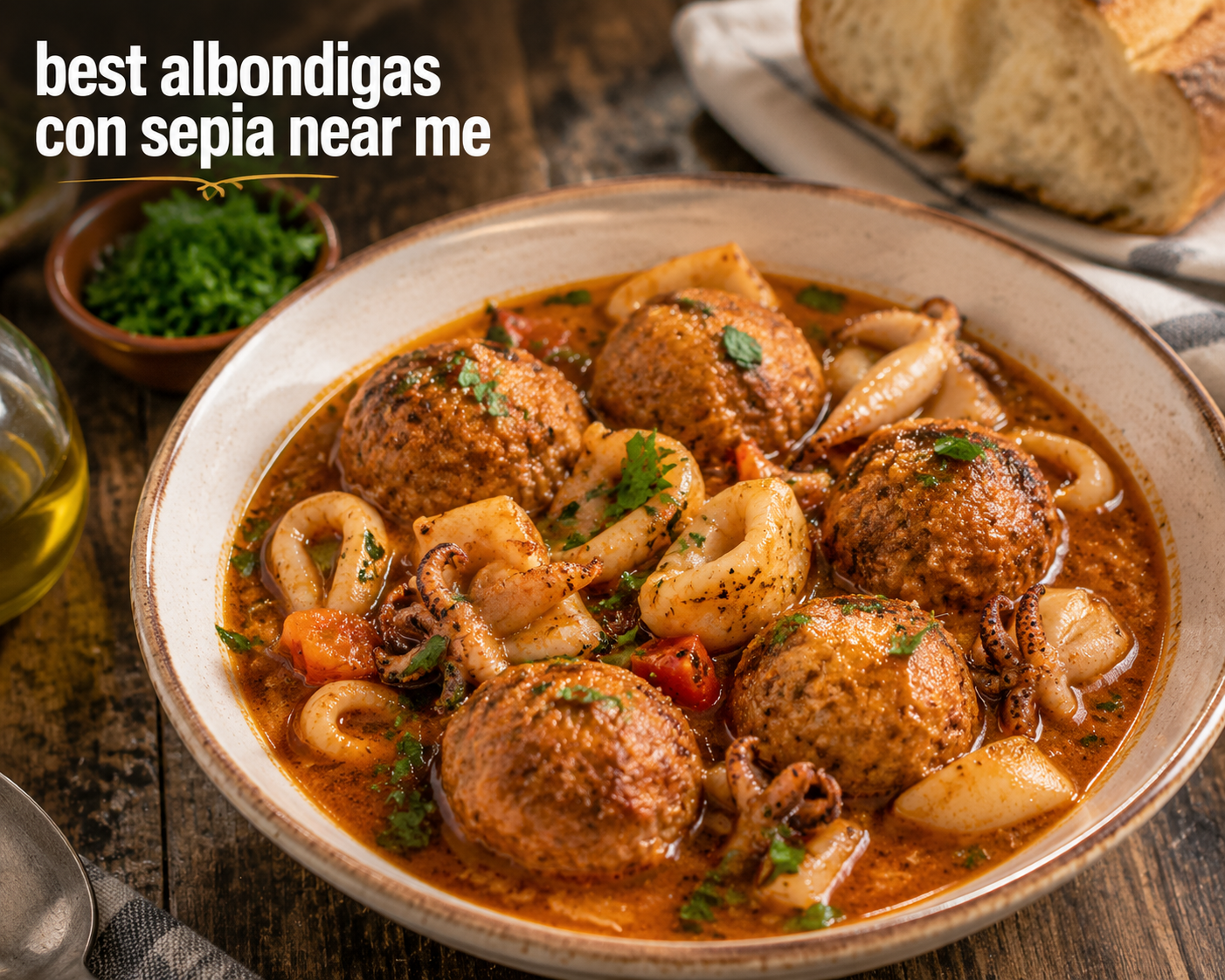
If you’re searching for the best albondigas con sepia near me, you’re tapping into a unique corner of Mediterranean cuisine that combines meat, seafood, and rich sauce in one unforgettable dish. Albondigas con sepia — literally “meatballs with cuttlefish” — is a traditional Spanish recipe especially cherished in regions like Catalonia, where it reflects the culinary tradition of mar y montaña (sea and mountain), blending flavors from both land and sea.
Below, you’ll find everything you need to know about this delicious dish, its history, ingredients, variations, and how to best seek it out in local eateries or even recreate it at home.
Key Facts About Albondigas con Sepia
| Aspect | Details |
|---|---|
| Dish Name | Albondigas con Sepia |
| Origin | Spain (Catalonia) |
| Cuisine Style | Mar y montaña (sea and mountain) |
| Main Protein | Meatballs (beef/ pork) and sepia (cuttlefish) |
| Typical Sauce | Tomato, wine, garlic, sofrito |
| Serving | Often with rice, potatoes, or bread |
| Texture & Flavor | Tender meatballs with rich seafood sauce |
| Popularity | Traditional and regional favorite |
What Is Albondigas con Sepia?
Albondigas con sepia is a traditional Spanish dish that seamlessly combines meatballs (albondigas) with pieces of sepia (cuttlefish) simmered together in a tomato‑based sauce. This “mar y montaña” concept pairs inland and coastal ingredients, offering complex and satisfying flavors that celebrate the diversity of Spanish gastronomy.
The name itself — albondigas con sepia — directly translates to meatballs with cuttlefish, but the cultural significance goes beyond translation. It exemplifies a longstanding Spanish tradition of combining ingredients from different environments to create dishes that are both hearty and elegant. This dish elevates simple, everyday ingredients into something far richer and more nuanced.
History and Cultural Background
Albondigas con sepia has roots deeply planted in Spanish regional cuisine, especially in Catalonian gastronomy, where the concept of “mar y montaña” has long been celebrated. This style emerged centuries ago in coastal regions where fishermen and farmers would merge the bounty of the sea with meat from the land into a balanced, flavorful dish.
The tradition recognizes that seafood and meat can coexist harmoniously on the plate, producing outcomes that showcase both textures and flavors. Cuttlefish, with its firm, slightly sweet flesh, pairs particularly well with traditional tomato‑based sauces and tender meatballs, which absorb the aromatic richness of slow‑cooked humanity.
Ingredients That Define the Dish
Although variations exist, the key components of albondigas con sepia typically include:
Meatballs (albondigas)
• Ground meat (usually a combination of pork and beef)
• Egg and bread soaked in milk for tenderness
• Garlic, parsley, salt, and pepper
Sepia (Cuttlefish)
• Cleaned and cut into bite‑sized pieces
• Often cooked gently to ensure a tender texture
Sauce (sofrito)
• Olive oil, onion, garlic
• Tomato or tomato sauce
• White wine
• Fish or seafood stock
• Optional guisantes (peas) or other vegetables
The resulting stew-like concoction is rich and balanced — the meatballs add depth while the sepia brings an oceanic brightness, all complemented by the savory sauce. Rice, potatoes, or good crusty bread make excellent accompaniments for savoring every drop of the sauce.
Flavor Profile and Texture
One of the hallmarks of albondigas con sepia is its contrasting yet complementary flavor and texture profile. The meatballs are tender and juicy, with traditional seasoning that evokes Spanish comfort food. Meanwhile, the sepia chunks maintain a slightly firm, slightly chewy texture that stands up well to slow cooking.
The sauce melds these two elements together, often bearing a rich, tangy character from tomatoes and white wine, rounded out with aromatics like garlic and parsley. A well‑cooked version will balance savory depth, subtle sweetness, and textural contrast to create a dish that’s simultaneously rustic and refined.
Why It’s Searched as “Best Albondigas con Sepia Near Me”
Searching for the best albondigas con sepia near me reflects growing global interest in authentic regional foods — not just common international staples. People who seek out this dish are often food enthusiasts, travelers, or locals looking to enjoy Catalonian or Spanish heritage cuisine prepared by skilled chefs who understand the nuances of mar y montaña cooking.
While this dish is traditional, it isn’t as globally ubiquitous as paella or tapas, making it a coveted find in restaurants that specialize in Spanish or Mediterranean cuisine. For many, this search term represents a quest for authenticity, flavor, and memorable dining experience.
How Restaurants Prepare Albondigas con Sepia
The best versions of albondigas con sepia strike a balance between slow‑braised depth and fresh seafood character. A typical restaurant preparation technique involves:
- Searing the Meatballs: Meatballs are lightly browned to seal in juices before simmering.
- Preparing the Sofrito: A foundational mixture of olive oil, garlic, and onion is cooked until fragrant.
- Adding Sepia: Cuttlefish is added in stages to ensure tender texture.
- Deglazing with Wine: White wine enhances savory depth and acidity.
- Simmering Together: Meatballs and sepia cook slowly in sauce, allowing flavors to meld.
Chefs often finish the dish with fresh herbs like parsley and serve it alongside rice or rustic bread to soak up its rich sauce.
Tips for Spotting High‑Quality Albondigas con Sepia
When looking for the best albondigas con sepia near me, keep these markers of quality in mind:
Balanced Flavor: Neither the seafood nor meat should overpower — both should shine in harmony.
Tender Texture: Sepia must be cooked just right — firm yet not tough.
Rich Sauce: The tomato and wine base should be savory and aromatic.
Fresh Ingredients: Quality meat, fresh cuttlefish, and well‑seasoned sofrito make all the difference.
These elements signal careful preparation and respect for tradition, making the dish memorable.
Choose How You Want It Served
Depending on the restaurant or chef, albondigas con sepia may be presented in various ways:
Classic Stew: Served with rice or potatoes that absorb the sauce.
Tapas‑Style: Smaller portions ideal for sharing.
Gourmet Presentation: Elevated plating with modern culinary twists.
In each variation, the core integrity of the dish remains intact — tender meatballs, succulent cuttlefish, and rich Mediterranean sauce.
At‑Home Version: Experience the Tradition Yourself
While finding the best albondigas con sepia near me can delight any food lover, the dish is also rewarding to prepare at home. By using fresh ingredients and allowing the sauce to simmer slowly, home cooks can replicate the traditional Catalonian experience. Recipes often start with combining the meatball mixture, forming them, and searing before adding them to the simmering sauce with sepia and aromatics.
This approach preserves the authentic essence of the dish while allowing home chefs to adjust seasoning, accompaniments, and presentation to personal taste.
Conclusion
Albondigas con sepia represents a beautifully balanced Spanish classic that marries land and sea in one delectable plate. Its reputation as an esteemed traditional dish has led many food lovers to seek out the best albondigas con sepia near me — a search for authentic preparation, rich flavor, and cultural heritage. Whether enjoyed at a restaurant specializing in Mediterranean cuisine or lovingly prepared at home, this dish offers a taste of Spanish culinary tradition that’s both comforting and rich in character.
Frequently Asked Questions (FAQs)
1. What is albondigas con sepia?
Albondigas con sepia is a traditional Spanish dish combining meatballs with cuttlefish cooked together in a savory sauce, representing the classic “mar y montaña” style.
2. Where does albondigas con sepia originate?
This dish has its roots in Spanish cuisine, especially in Catalonia, where blending meat and seafood in one stew is celebrated.
3. What does sepia add to the dish?
Sepia (cuttlefish) provides a tender, slightly sweet seafood texture that enhances the sauce and pairs beautifully with the meatballs.
4. How is albondigas con sepia traditionally served?
It is usually served as a stew with rice, potatoes, or bread to absorb the flavorful sauce.
5. Can I make albondigas con sepia at home?
Yes, with fresh ingredients and slow simmering of sauce, you can prepare this dish yourself, following traditional methods.
