


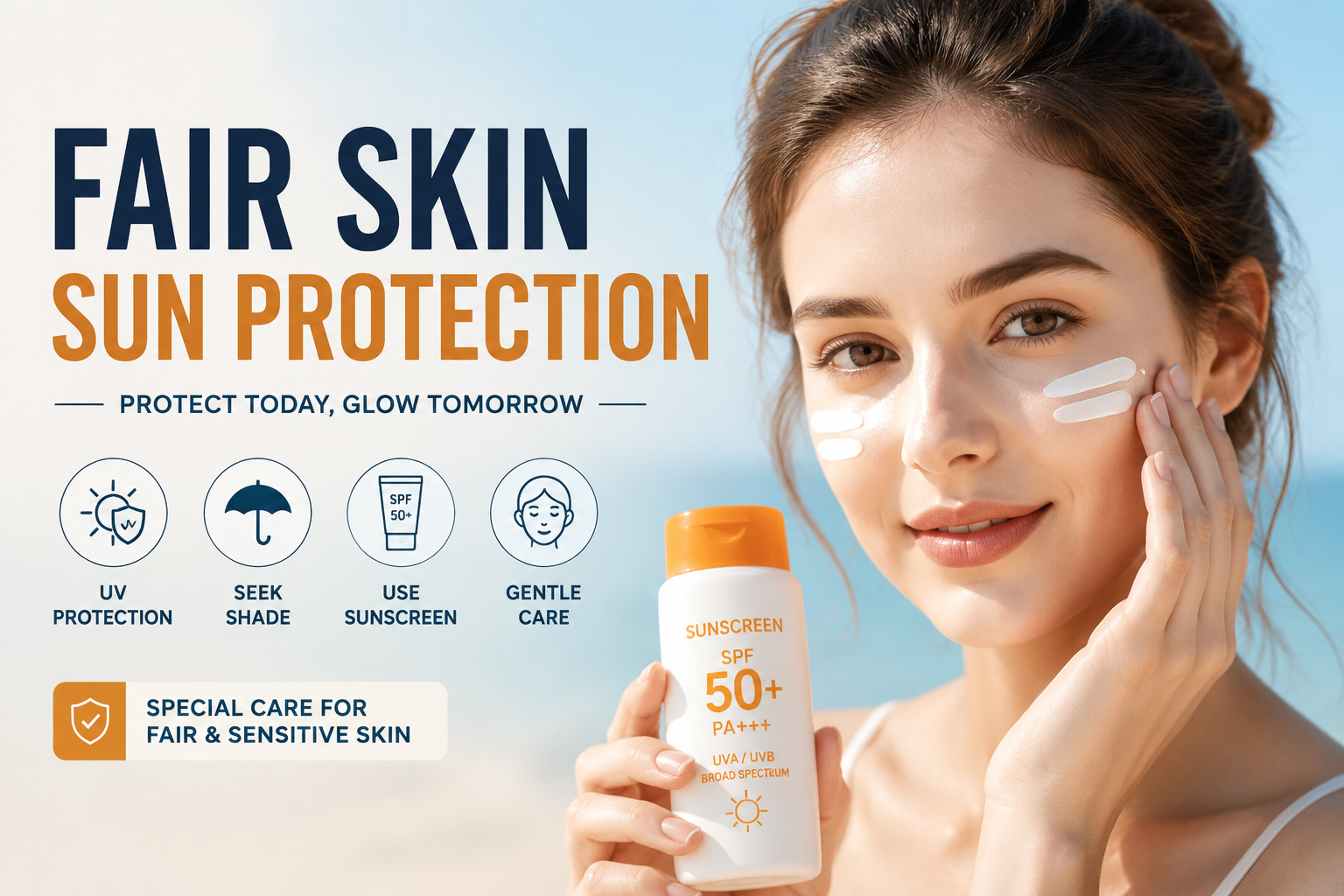
Fair skin is more delicate and sensitive to sunlight because it contains less melanin, the natural pigment that protects against harmful ultraviolet (UV) rays. While exposure to sunlight is necessary for vitamin D synthesis, unprotected fair skin can burn easily, develop premature aging, pigmentation, and even increase the risk of skin cancer. Understanding the importance of fair skin sun protection is crucial to maintaining healthy, radiant skin while enjoying outdoor activities safely.
| Quick Bio |
|---|
| Topic Focus: Fair skin sun protection |
| Purpose: Educate on UV safety and skin health |
| Target Audience: Individuals with fair or sensitive skin |
| Benefit: Practical strategies to prevent sun damage |
Why Fair Skin Needs Special Protection
People with fair skin are naturally more prone to UV damage because they produce less melanin, which provides natural defense against sunburn. Without sufficient melanin, fair skin can experience:
- Sunburn: Redness, pain, and peeling caused by UVB rays.
- Premature Aging: Fine lines, wrinkles, and loss of skin elasticity due to UVA rays.
- Pigmentation: Freckles, dark spots, and uneven skin tone are more visible.
- Increased Skin Cancer Risk: Fair skin is more susceptible to melanoma and other UV-induced skin cancers.
Protecting fair skin is not only about avoiding burns but also about preventing long-term damage and maintaining a youthful appearance.
Related keywords: UV protection, sensitive skin care, sunburn prevention.
Understanding SPF and Broad-Spectrum Protection
SPF Explained
SPF (Sun Protection Factor) measures how well a sunscreen shields the skin from UVB rays, which are responsible for sunburn.
- SPF 30: Blocks approximately 97% of UVB rays.
- SPF 50: Blocks around 98%, ideal for fair skin exposed to prolonged sun.
- Higher SPFs: Provide slightly more protection, but correct application and reapplication are key for effectiveness.
Broad-Spectrum Protection
A broad-spectrum sunscreen protects against both UVB (burning) and UVA (aging) rays. UVA rays penetrate deeply, breaking down collagen and causing fine lines, wrinkles, and pigmentation. Broad-spectrum formulations are essential for fair skin to prevent both immediate and long-term damage.
Related keywords: UVA protection, UVB protection, anti-aging skincare.
Types of Sunscreens for Fair Skin
Mineral (Physical) Sunscreens
- Contain zinc oxide or titanium dioxide, which reflect UV rays.
- Provide immediate protection upon application.
- Gentle for sensitive fair skin; tinted or micro-fine particle versions reduce white cast.
Chemical Sunscreens
- Absorb UV radiation and convert it into heat.
- Invisible on the skin, making them cosmetically appealing.
- May irritate sensitive fair skin if not formulated properly.
Tinted Sunscreens
- Offer extra protection against visible light.
- Can reduce redness and even skin tone while acting as a light makeup base.
Related keywords: sensitive skin sunscreen, hypoallergenic sunscreen, daily sunblock.
Daily Practices for Fair Skin Sun Protection
Sunscreen alone is not enough. Fair skin requires a comprehensive daily routine:
1. Correct Application of Sunscreen
- Apply 20–30 minutes before sun exposure.
- Cover all exposed areas: face, neck, hands, ears, and lips.
- Reapply every two hours, especially after sweating, swimming, or towel drying.
2. Protective Clothing
- Wear UPF-rated clothing to block UV rays.
- Use wide-brimmed hats to protect face, neck, and ears.
- UV-blocking sunglasses protect the delicate eye area.
3. Smart Sun Exposure
- Avoid peak sun hours (10 a.m.–4 p.m.) for maximum safety.
- Seek shade whenever possible during prolonged outdoor activities.
4. Skin Monitoring
- Check for new freckles, moles, or discoloration.
- Consult a dermatologist for any unusual or changing skin marks.
Related keywords: daily sun care, UV protection tips, sun safety for fair skin.
Additional Skincare Tips
Hydration and Moisturization
UV exposure can dry the skin. Using moisturizers or after-sun balms helps maintain hydration and reduce irritation.
Antioxidant Support
- Topical antioxidants like vitamin C and E neutralize free radicals caused by UV exposure.
- Support skin resilience and repair from environmental damage.
Nighttime Repair
- Gentle exfoliation removes dead skin cells, improving sunscreen absorption.
- Night creams with peptides and hyaluronic acid support collagen regeneration.
Related keywords: anti-aging for fair skin, skin repair, antioxidant skincare.
Common Mistakes to Avoid
- Skipping reapplication: Sunscreen loses effectiveness with sweat, water, and friction.
- Relying solely on SPF: Combine sunscreen with clothing, hats, and shade.
- Neglecting cloudy days: Up to 80% of UV rays pass through clouds; daily protection is essential.
Conclusion
Fair skin sun protection is essential for maintaining healthy, radiant skin and preventing long-term damage. By understanding the vulnerabilities of fair skin and implementing a holistic routine—including sunscreen, protective clothing, antioxidants, and smart sun exposure—individuals can enjoy outdoor activities safely. Consistent sun protection not only prevents immediate sunburn but also protects against aging, pigmentation, and skin cancer, ensuring fair skin remains luminous and youthful for years to come.
You May Like it: Glossywise com: A Modern Platform for Lifestyle, Beauty, and Digital Trends
FAQs
Q1: What SPF is best for fair skin?
A: SPF 50 or higher is recommended for extended sun exposure, while SPF 30+ is suitable for daily incidental sunlight.
Q2: Is sunscreen enough for fair skin protection?
A: No. Combine sunscreen with protective clothing, hats, sunglasses, and seeking shade for complete protection.
Q3: Are mineral sunscreens better for fair skin?
A: Yes. Zinc oxide and titanium dioxide provide gentle, immediate protection and are less likely to irritate sensitive skin.
Q4: How often should sunscreen be reapplied?
A: Every two hours, or immediately after swimming, sweating, or towel drying.
Q5: Can tinted sunscreens benefit fair skin?
A: Absolutely. Tinted sunscreens protect against visible light, reduce redness, and even out skin tone.
Q6: Does fair skin need sun protection in winter?
A: Yes. UV rays penetrate clouds, and snow can reflect sunlight, increasing exposure. Daily SPF is recommended year-round.
