


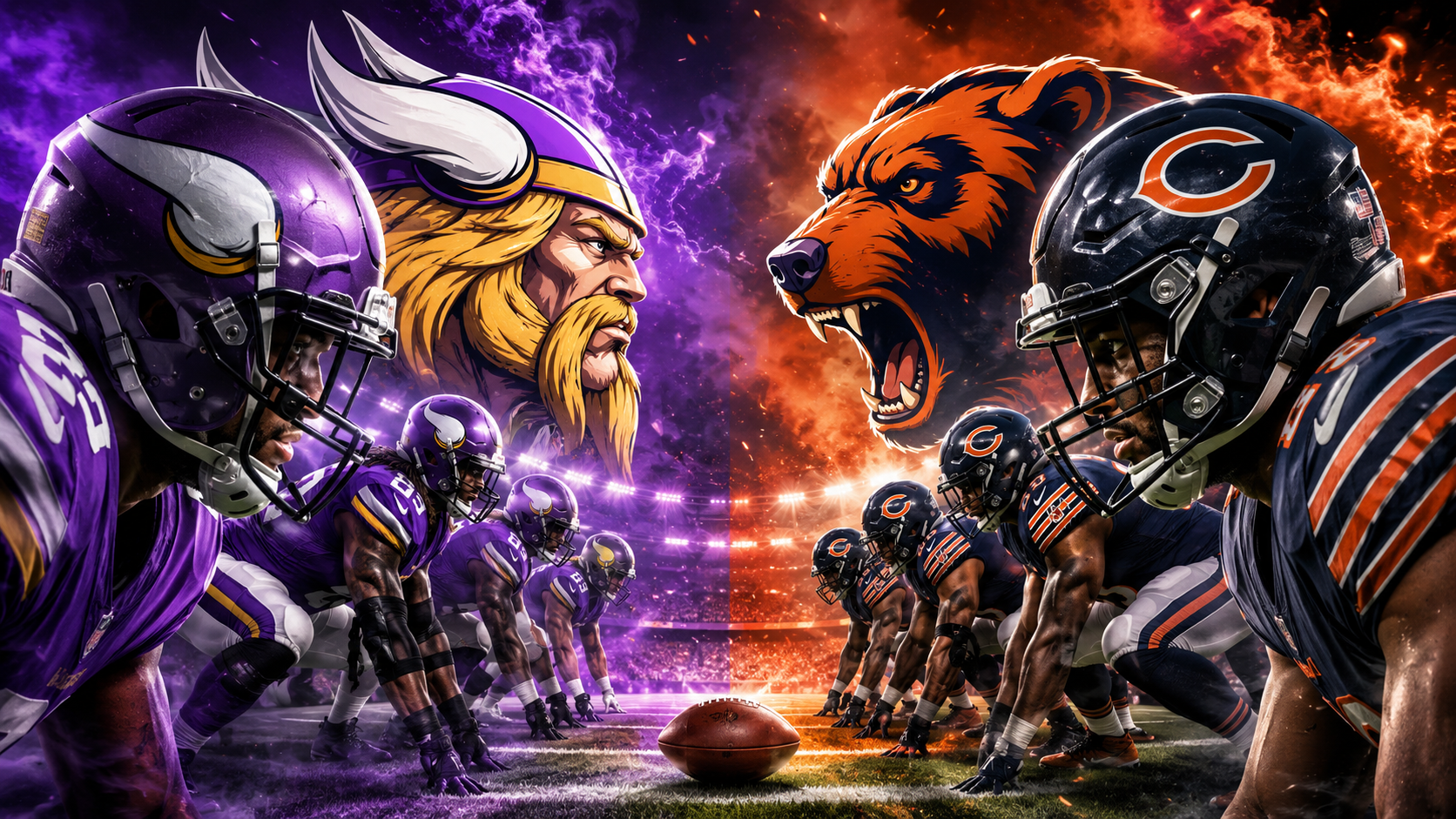
The rivalry between the Minnesota Vikings and the Chicago Bears has produced some of the most memorable moments in NFL history. Whenever these two NFC North teams meet, fans can expect intense competition, standout performances, and game-changing plays. Analyzing the Minnesota Vikings vs Chicago Bears match player stats provides valuable insight into how individual players influenced the outcome and where each team excelled or struggled throughout the contest.
| Key Fact | Details |
|---|---|
| Matchup | Minnesota Vikings vs Chicago Bears |
| Division | NFC North |
| League | NFL |
| Known For | Historic rivalry and defensive battles |
| Key Areas of Analysis | Passing, rushing, receiving, defense, special teams |
| Notable Players | Quarterbacks, running backs, wide receivers, linebackers, and defensive backs |
| Fan Interest | Individual player performances and game impact |
| Importance of Stats | Helps evaluate team strengths and weaknesses |
Overview of the Vikings and Bears Rivalry
The Minnesota Vikings and Chicago Bears have shared a fierce divisional rivalry for decades. Their meetings often influence playoff positioning and division standings. Both franchises have rich histories, passionate fan bases, and traditions built around strong defensive football.
When examining the Minnesota Vikings vs Chicago Bears match player stats, it becomes clear that individual performances often determine the winner. Whether it is a quarterback leading a late-game drive, a running back controlling the tempo, or a defender forcing a crucial turnover, player statistics tell the story behind the final score.
Quarterback Performance Analysis
Quarterbacks are usually the focal point of any NFL game, and this matchup was no exception. The passing game played a significant role in determining offensive success.
For the Vikings, the quarterback displayed solid decision-making and accuracy throughout the game. Short and intermediate passes helped move the chains consistently while limiting unnecessary risks. The quarterback completed a high percentage of passes and demonstrated excellent chemistry with his receiving corps.
On the Bears’ side, the quarterback faced a challenging defensive front but still managed to create opportunities through both passing and mobility. Several key completions kept drives alive and allowed Chicago to remain competitive throughout the contest.
Important quarterback statistics often include:
- Passing yards, completion percentage, touchdowns, interceptions, and quarterback rating.
These numbers provide a clear picture of overall efficiency and effectiveness under pressure.
Running Back Contributions
The ground game remains an essential component of football success, especially in divisional matchups where physical play often dominates.
Minnesota’s running backs contributed significantly by gaining tough yards between the tackles and helping control possession. Their ability to convert short-yardage situations extended drives and reduced pressure on the passing game.
Chicago’s rushing attack also showed flashes of effectiveness. The Bears relied on a combination of speed and power to challenge the Vikings’ defensive front. Several explosive runs helped generate momentum and provided balance to the offense.
When reviewing the Minnesota Vikings vs Chicago Bears match player stats, rushing yards, yards per carry, and touchdowns reveal which team controlled the line of scrimmage more effectively.
Wide Receiver and Tight End Performances
Receivers often determine whether a passing attack becomes explosive or predictable. Both teams featured talented pass catchers who played important roles throughout the game.
Minnesota’s wide receivers consistently created separation and made critical catches during important situations. Their route-running precision allowed the offense to sustain drives and generate scoring opportunities.
The Vikings’ tight end also proved valuable as a reliable target in the middle of the field. Several receptions on third down highlighted the player’s importance within the offensive scheme.
For Chicago, the receiving group displayed resilience despite facing strong defensive coverage. Big receptions downfield helped stretch the defense and create opportunities for additional offensive production.
Key receiving statistics generally include:
- Receptions
- Receiving yards
- Average yards per catch
- Longest reception
- Touchdowns
These numbers showcase how effectively pass catchers impacted the game.
Defensive Standouts from Minnesota
Defense has traditionally been a strength for the Vikings, and several players delivered impressive performances.
The defensive line consistently applied pressure to the Bears’ quarterback. Sacks and quarterback hits disrupted offensive rhythm and forced hurried decisions. This pressure often prevented Chicago from fully establishing its passing attack.
Minnesota’s linebackers were active throughout the game, contributing tackles in both run and pass defense situations. Their ability to diagnose plays quickly helped limit gains and maintain defensive discipline.
The secondary also played a crucial role. Defensive backs defended passes effectively and prevented several potential big plays. Strong coverage forced Chicago’s offense to work harder for every yard gained.
Examining the Minnesota Vikings vs Chicago Bears match player stats highlights how defensive contributions often have just as much impact as offensive production.
Chicago Bears Defensive Performance
The Bears have built their reputation on defensive excellence for generations, and that tradition continued in this matchup.
Chicago’s defensive front created pressure at key moments, forcing the Vikings’ offense into difficult situations. Defensive linemen disrupted running lanes and challenged Minnesota’s offensive line throughout the contest.
Linebackers contributed with strong tackling and pursuit angles. Their ability to limit yards after contact prevented several potentially explosive plays.
The Bears’ secondary also made important contributions by contesting passes and limiting opportunities for deep completions. Their disciplined approach helped keep the game competitive.
Defensive statistics that typically stand out include tackles, sacks, tackles for loss, pass breakups, forced fumbles, and interceptions.
Special Teams Impact
Special teams are often overlooked, but they frequently influence close NFL games.
Minnesota’s kicking unit delivered consistent results when scoring opportunities arose. Successful field goals and extra points ensured the offense maximized its production.
The Vikings’ punt and kickoff coverage teams performed effectively by limiting return opportunities and controlling field position.
Chicago’s special teams unit also made valuable contributions. Strong returns provided favorable starting positions, while disciplined coverage prevented significant gains.
Field position remains one of football’s most important hidden factors, making special teams statistics a critical part of any complete game analysis.
Key Statistical Leaders
Several players emerged as statistical leaders during the contest.
For Minnesota, the quarterback led the offense with efficient passing production, while the top receiver accumulated significant yardage through consistent route execution. The leading rusher provided balance and helped sustain lengthy drives.
Defensively, a standout linebacker recorded numerous tackles, while a defensive lineman contributed sacks and quarterback pressures.
Chicago’s offensive leaders included the quarterback and top receiving target, both of whom generated important plays throughout the game. The Bears’ leading rusher also delivered several productive runs.
On defense, multiple players contributed strong tackling numbers and helped contain Minnesota’s offensive attack.
The Minnesota Vikings vs Chicago Bears match player stats clearly illustrate how individual excellence can influence team performance in every phase of the game.
Turnovers and Momentum Shifts
One of the most important aspects of football is turnover differential. Giveaways and takeaways often determine the outcome of closely contested games.
Minnesota capitalized on opportunities created by defensive pressure and disciplined coverage. Forced turnovers helped shift momentum and provided favorable field position.
Chicago also generated key defensive stops that kept the game within reach. Momentum swings created excitement and demonstrated the competitive nature of the rivalry.
Analyzing turnover-related statistics offers valuable insight into why certain drives succeeded while others ended prematurely.
Offensive Efficiency Comparison
Comparing offensive efficiency helps explain which team executed its game plan more successfully.
Minnesota demonstrated consistency through balanced play-calling and efficient execution. The offense converted critical third downs and maintained possession during important stretches.
Chicago showed determination and adaptability. Despite facing defensive challenges, the Bears continued to generate opportunities through a combination of passing and rushing plays.
Metrics such as total yards, third-down conversion rate, red-zone efficiency, and time of possession provide a deeper understanding of offensive performance.
Defensive Efficiency Comparison
Defensive success often extends beyond basic tackle totals.
Minnesota excelled at limiting explosive plays and applying pressure in passing situations. The defense maintained discipline and prevented several scoring opportunities.
Chicago’s defense focused on containing the Vikings’ offensive weapons and forcing difficult decisions. Strong tackling and disciplined positioning contributed to several important stops.
The Minnesota Vikings vs Chicago Bears match player stats demonstrate that both defenses played critical roles in shaping the game’s outcome.
Lessons from the Match
Several important takeaways emerged from this contest.
First, balanced offensive production remains essential for long-term success. Teams that can run and pass effectively become much harder to defend.
Second, defensive pressure continues to be one of the most influential factors in modern football. Consistent pressure disrupts offensive timing and creates turnover opportunities.
Third, special teams remain a vital component of winning football. Field position and kicking efficiency can make the difference in closely contested games.
Finally, individual player performances often determine whether a team can capitalize on critical moments.
Future Implications for Both Teams
Performances in divisional matchups often carry significance beyond a single game. Coaches use player statistics to evaluate strengths, identify weaknesses, and adjust strategies for future opponents.
Minnesota can build on strong offensive execution and defensive consistency. Continued development in these areas may improve playoff aspirations and division standing.
Chicago can take positive lessons from individual performances while addressing areas that require improvement. Competitive efforts against divisional opponents often provide valuable experience for players and coaches alike.
The Minnesota Vikings vs Chicago Bears match player stats offer a detailed snapshot of each team’s current strengths and areas for growth.
Conclusion
The Minnesota Vikings and Chicago Bears once again delivered a compelling divisional battle filled with impressive individual performances and strategic competition. From quarterback efficiency and rushing production to defensive pressure and special teams contributions, every aspect of the game played a role in shaping the final result.
Carefully examining the Minnesota Vikings vs Chicago Bears match player stats reveals much more than simple numbers. These statistics tell the story of momentum shifts, key plays, standout athletes, and tactical decisions that influenced the contest from start to finish. For fans, analysts, and football enthusiasts, player statistics remain one of the best ways to understand how and why a game unfolded the way it did.
As this historic rivalry continues, future matchups will undoubtedly produce more memorable performances, making statistical analysis an essential tool for appreciating the competition between these two proud NFL franchises.
Read Also: Toronto Blue Jays vs Dodgers Match Player Stats: Stunning MLB Showdown
