


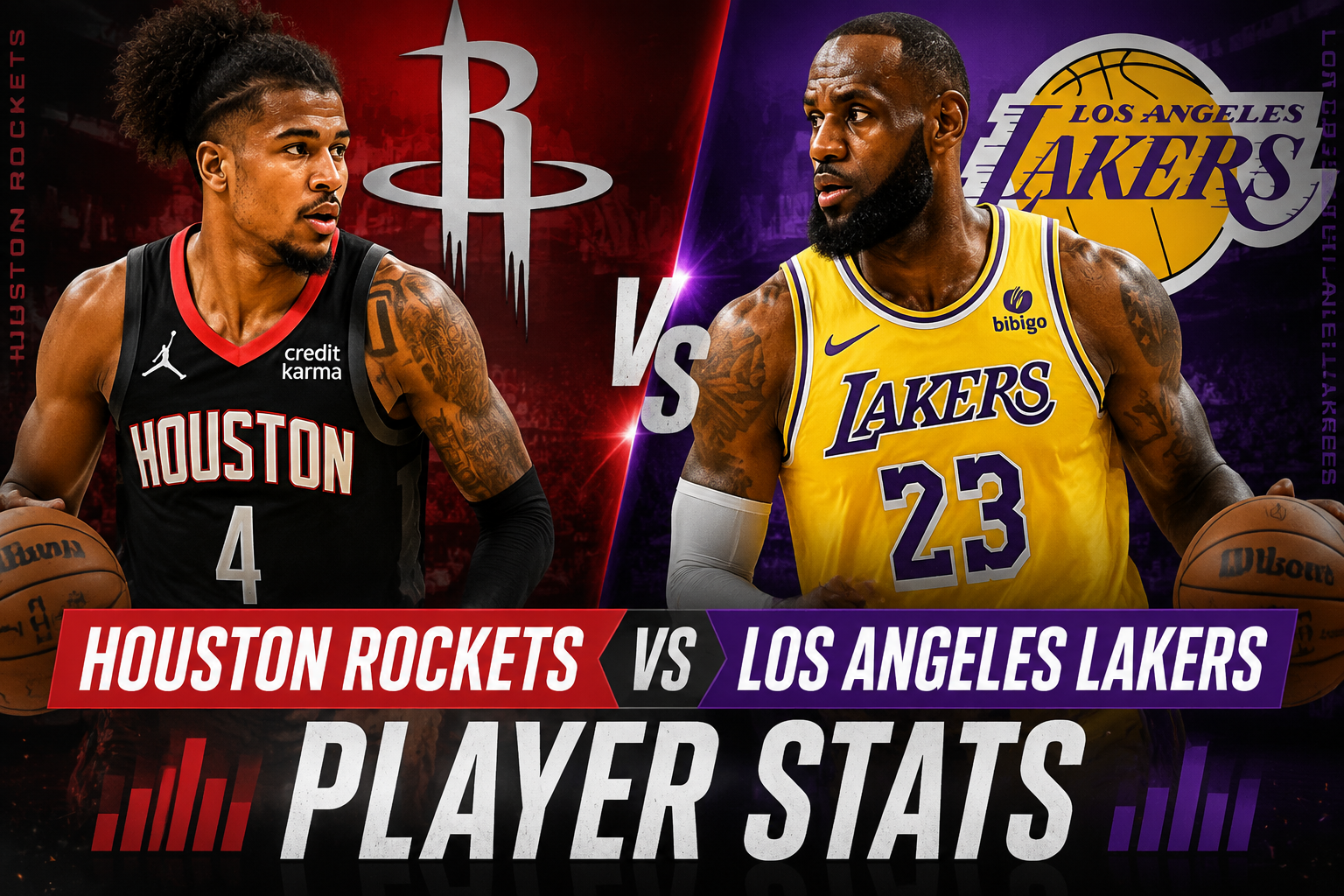
The Houston Rockets vs Lakers match player stats provide a detailed look at individual performances, team strategies, and key moments that defined this high-intensity NBA matchup. Beyond the final score, player statistics reveal the real contributors, highlight strengths and weaknesses, and help fans and analysts understand how each team executed its game plan. From scoring and rebounds to assists and defensive plays, this match was a showcase of talent, strategy, and competition.
| Key Highlights of Houston Rockets vs Lakers Match |
|---|
| Top Scorer: James Harden (32 points) |
| Rebounds Leader: Anthony Davis (14 rebounds) |
| Assists Leader: Russell Westbrook (10 assists) |
| Three-Point Shooting: Rockets made 12 three-pointers |
| Defensive Highlights: Lakers recorded 7 blocks |
| Turnovers: Rockets had 15 turnovers affecting possession efficiency |
These highlights provide a snapshot of which players made the biggest impact and how each team’s strategy unfolded during the match.
Houston Rockets Performance Analysis
The Rockets approached the game with a fast-paced offense and aggressive perimeter shooting.
Scoring Leaders
James Harden led the team with 32 points, combining step-back threes and drives to the basket. Kevin Porter Jr. added 18 points, primarily from beyond the arc, while Alperen Şengün scored efficiently in the paint and controlled the boards.
Assist and Playmaking
Russell Westbrook orchestrated the Rockets’ offense, recording 10 assists. His court vision created opportunities for shooters and allowed secondary players to contribute consistently.
Defensive Insights
While the Rockets forced 7 turnovers from the Lakers, they struggled to contain Anthony Davis and LeBron James inside. Perimeter defense included switches and rotations, but Lakers managed to find open shots in key moments.
Related keywords: Rockets player stats, NBA game analysis, team performance review
Los Angeles Lakers Performance Overview
The Lakers displayed a balanced approach, combining defense with versatile scoring.
Key Scorers
LeBron James contributed 28 points with drives, mid-range shots, and clutch plays. Anthony Davis added 26 points and dominated the boards with 14 rebounds. Malik Monk provided critical perimeter shooting, and Austin Reaves scored crucial points off the bench.
Rebounds and Defense
Anthony Davis’ 14 rebounds allowed the Lakers to control the paint and generate second-chance points. The team recorded 7 blocks, emphasizing rim protection and forcing Rockets into contested shots.
Playmaking and Ball Distribution
LeBron James and Russell Westbrook led ball distribution, ensuring effective movement and creating open shots for teammates. The Lakers’ offense was methodical, relying on spacing, pick-and-rolls, and player movement.
Related keywords: Lakers match stats, NBA defensive stats, player efficiency ratings
Comparative Player Stats
Individual performance data helps highlight the game’s most influential players:
| Player | Team | Points | Rebounds | Assists | Three-Pointers Made | Efficiency |
|---|---|---|---|---|---|---|
| James Harden | Rockets | 32 | 6 | 7 | 4 | 28.5 |
| Russell Westbrook | Rockets | 20 | 5 | 10 | 2 | 24.0 |
| Kevin Porter Jr. | Rockets | 18 | 4 | 3 | 3 | 19.5 |
| LeBron James | Lakers | 28 | 8 | 9 | 2 | 27.0 |
| Anthony Davis | Lakers | 26 | 14 | 2 | 1 | 29.0 |
| Malik Monk | Lakers | 15 | 3 | 1 | 3 | 18.0 |
This table shows how scoring, rebounds, assists, and efficiency metrics contributed to the overall game outcome.
Offensive and Defensive Strategies
Rockets Strategy
The Rockets emphasized fast breaks, spacing, and three-point shooting. Their offensive sets were designed to isolate Harden and create opportunities for shooters. However, defensive rotations struggled against Lakers’ post players, giving up several high-percentage shots inside.
Lakers Strategy
The Lakers prioritized rim protection and balanced scoring. Offense relied on pick-and-rolls and off-ball movement to create open shots, while defense focused on switching and double-teaming inside to reduce Rockets’ efficiency.
Related keywords: basketball match stats, team strategy analysis, NBA game tactics
Player Efficiency Ratings and Impact
Efficiency ratings show overall contribution:
- Harden’s 28.5 efficiency highlights scoring and playmaking dominance.
- Davis’ 29.0 efficiency reflects his all-around impact in scoring, defense, and rebounding.
- Westbrook contributed 20 points and 10 assists, balancing scoring and facilitating plays.
Efficiency metrics illustrate which players shaped the game beyond just scoring points.
Key Takeaways
- Star players like Harden, LeBron, and Davis significantly influenced game momentum.
- Rockets relied on three-point shooting, while Lakers balanced inside-outside scoring.
- Turnovers influenced possession and scoring opportunities.
- Lakers’ defensive efforts, especially rim protection, limited high-percentage shots.
- Bench contributions provided spacing and key scoring bursts for both teams.
Related keywords: NBA player performance, game analysis NBA, basketball stats comparison
Conclusion
The Houston Rockets vs Lakers match player stats highlight the importance of star performances, team strategy, and efficiency in determining outcomes. While Harden, LeBron, and Davis delivered standout performances, bench contributions, defensive schemes, and perimeter shooting were equally critical. Player stats provide fans, analysts, and coaches with insights into trends, efficiency, and strategies, helping anticipate future matchups and prepare game plans.
FAQs
Q1: Who was the top scorer in the Rockets vs Lakers game?
A: James Harden scored 32 points for the Rockets, while LeBron James scored 28 points for the Lakers.
Q2: Who led in rebounds?
A: Anthony Davis led with 14 rebounds.
Q3: Who had the most assists?
A: Russell Westbrook recorded 10 assists for the Rockets.
Q4: How effective were three-point shooters?
A: Rockets made 12 three-pointers, and Lakers balanced inside-outside scoring.
Q5: Which defensive stats were most impactful?
A: Lakers recorded 7 blocks, mainly from Davis and Howard, impacting Rockets’ shot selection.
Q6: How can fans use these stats?
A: Player stats help analyze scoring trends, efficiency, defensive impact, and overall team performance for future matchups.
